If you’ve ever called around for a concrete pumper in Orange County, you’ve probably heard two terms thrown around: big rock pumping and pea gravel pumping. They sound like industry jargon, but the difference matters — and picking the wrong one can mean a job that won’t pour, a truck that won’t fit, or money wasted on the wrong equipment.
Here’s a plain-English breakdown of what the two types of concrete pumping actually are, when you need each, and how to know which one your project calls for.
What’s actually different: it’s the aggregate
Concrete is a mix of cement, water, sand, and rock (aggregate). The “big rock vs. pea gravel” split refers to the size of that rock:
- Big rock pumping uses standard concrete with roughly 3/4-inch aggregate. This is what shows up on most commercial pours, foundations, and large flatwork.
- Pea gravel pumping uses concrete mixed with smaller, pea-sized aggregate (typically 3/8-inch). The smaller stone is required because the pump and hose used for this work have a smaller diameter — standard 3/4-inch rock would jam the line.
So when a pumper tells you they “do pea gravel only,” they’re not talking about landscape rock. They’re telling you they specialize in jobs that call for the smaller-aggregate mix and the equipment that goes with it.
When you need pea gravel pumping
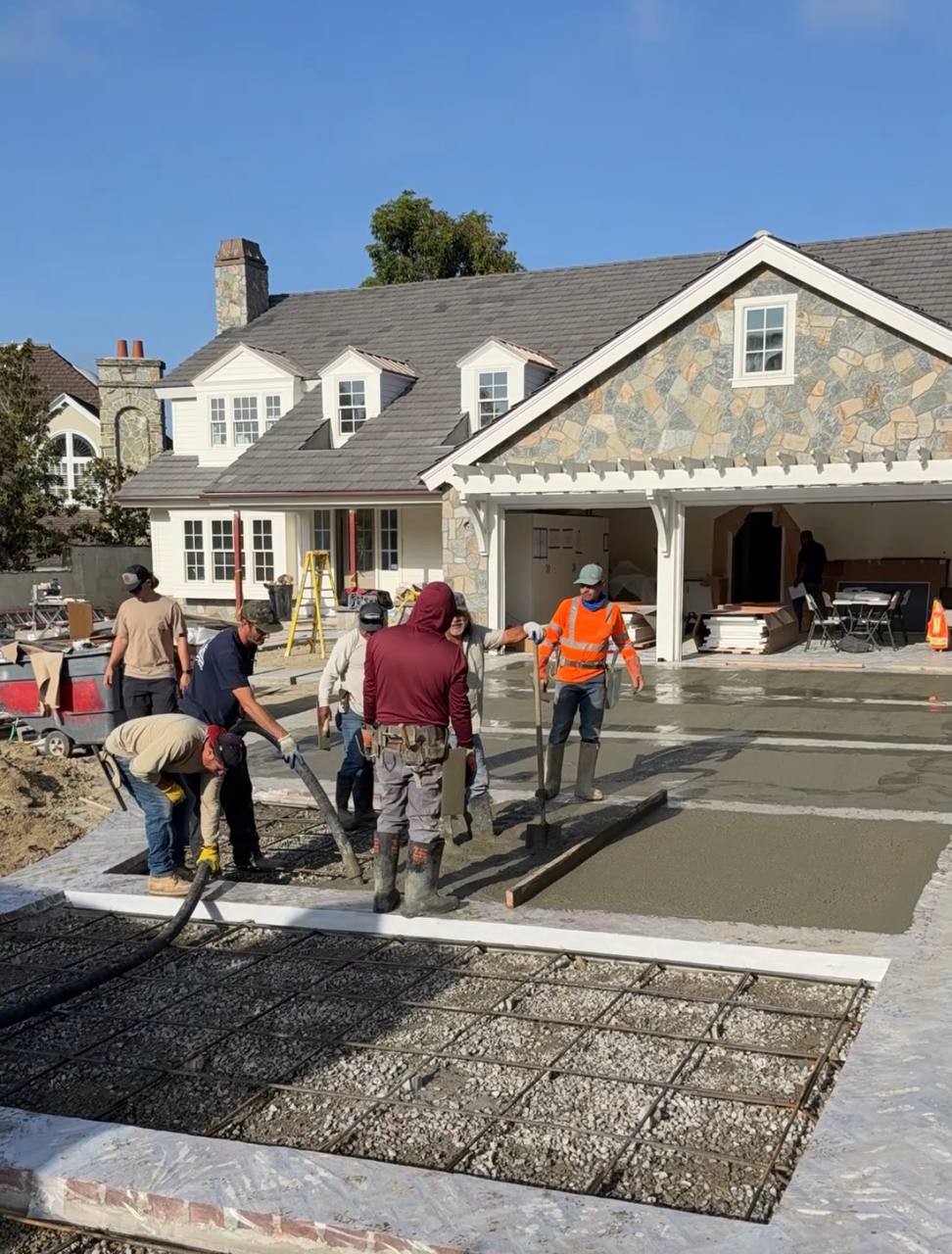
Pea gravel pumping is the right call for most residential work in Orange County, especially anywhere a big boom truck physically can’t go or wouldn’t be practical. The biggest categories:
- Pool decks and patios — most are behind the house, with limited access through a gate or side yard
- Pool and spa shells — shotcrete and gunite work often uses pea gravel mix
- Backyard slabs and pads — sheds, BBQ islands, fire pit foundations
- Footings in tight access — additions, retaining walls, garden walls where wheelbarrowing isn’t realistic
- Side yards and narrow driveways — anywhere a chute can’t reach
- Second-story or rooftop pours — pea gravel hose can snake places a boom can’t
If your job is a backyard pour in Ladera Ranch, Coto de Caza, Rancho Mission Viejo, or anywhere in South OC where the truck has to park on the street and the concrete has to travel through the side yard — you’re almost certainly looking at pea gravel pumping.
When you need big rock pumping
Big rock pumping (usually a boom pump truck) is the right call when:
- The pour is large — think a full house foundation, commercial slab, or parking structure
- The truck has open access and room to set up
- The structural engineer specified standard 3/4-inch aggregate
- You need reach over a building or significant height
Big rock is faster on volume but requires more room and more setup. For most South OC residential work, it’s overkill — and often physically impossible to get on site.
How to know which one you need
Three quick questions:
- What does the mix design call for? Your ready-mix supplier or the engineer’s specs will say “3/8” or “pea gravel” or “3/4 standard.” That’s your answer.
- Can the truck physically reach the pour? If the truck has to park 50+ feet away or pump through a side yard, you need pea gravel.
- How much concrete? Under ~10 yards in tight access = pea gravel. Large open pours = big rock.
If you’re not sure, call before you order the concrete. A 5-minute conversation can prevent a delivery showing up that won’t pump.
Why this matters in Orange County
South OC backyards are notoriously tight. Big lots are rare, side yards are narrow, and most pools, patios, and outdoor projects sit somewhere a boom truck can’t get to. That’s why pea gravel pumping is the workhorse of residential concrete work in Ladera Ranch and the surrounding cities — and why hiring a pumper who specializes in it (instead of one who occasionally takes residential jobs between commercial work) usually means a smoother pour.
Working with Scott’s Concrete Pumping
Scott’s Concrete Pumping is a pea gravel pumping specialist serving Ladera Ranch and the rest of South Orange County. Owner-operated, focused on residential tight-access work — pool decks, patios, slabs, footings, and the kind of backyard pours that bigger outfits won’t touch or can’t reach.
If you have a project coming up and you’re not sure what kind of pump it needs, give us a call at (949) 315-5220 and we’ll talk it through before you order the concrete.